


How does the pull-out box reshape the ritualistic feel of product packaging with its ingenious structure and refined experience?
Release Time : 2026-01-30
In today's consumer experience, where emotional value and sensory details are increasingly emphasized, packaging has long transcended simple protection and transportation functions. It has become a crucial medium for brands to establish first impressions, convey aesthetic concepts, and even create a sense of ritual when unboxing. The pull-out box—a packaging format characterized by its smooth, pull-out inner box—is widely used in high-end gifts, jewelry and watches, electronic products, tea gift sets, and cosmetics, subtly enhancing the overall perceived value of the product through its elegant operational logic, layered spatial layout, and highly customizable visual presentation.
The allure of the pull-out box stems first from its unique interactive experience. Users simply grasp the inner box or the pull strap to experience the smooth, fluid pulling process, like slowly unveiling the curtain of a story. This linear, controllable opening method avoids the abruptness of flip-top packaging or the cumbersome folding structure, giving the unboxing process a relaxed and rhythmic feel. Designers often incorporate ribbons, grooves, or metal pull rings at the front of the inner box, facilitating opening and adding aesthetic appeal. Some high-end versions even employ magnetic soft-close or damped sliding rails, ensuring a quiet and precise opening experience, much like a fine instrument.
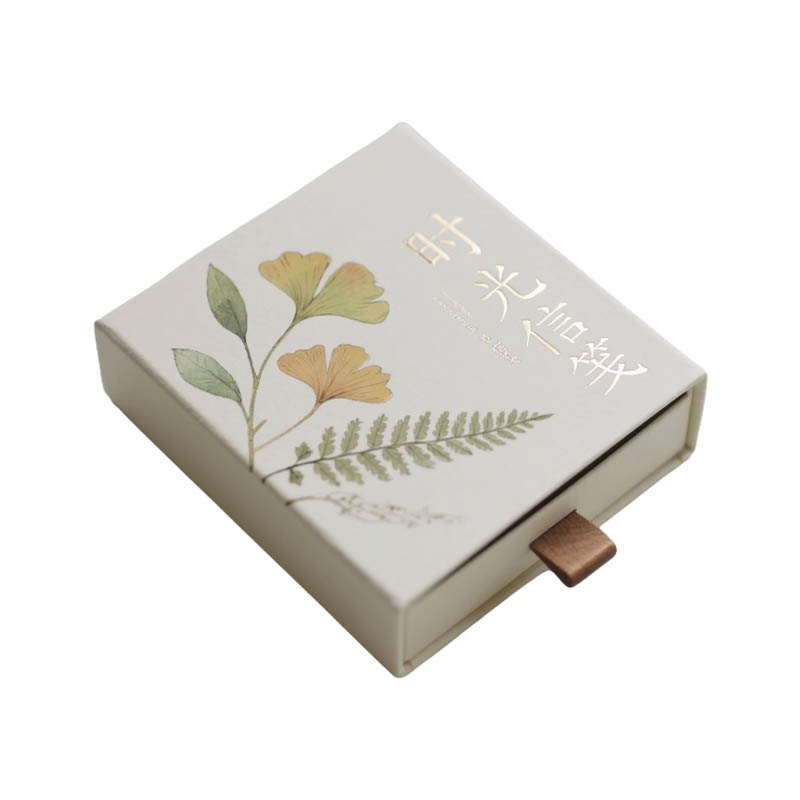
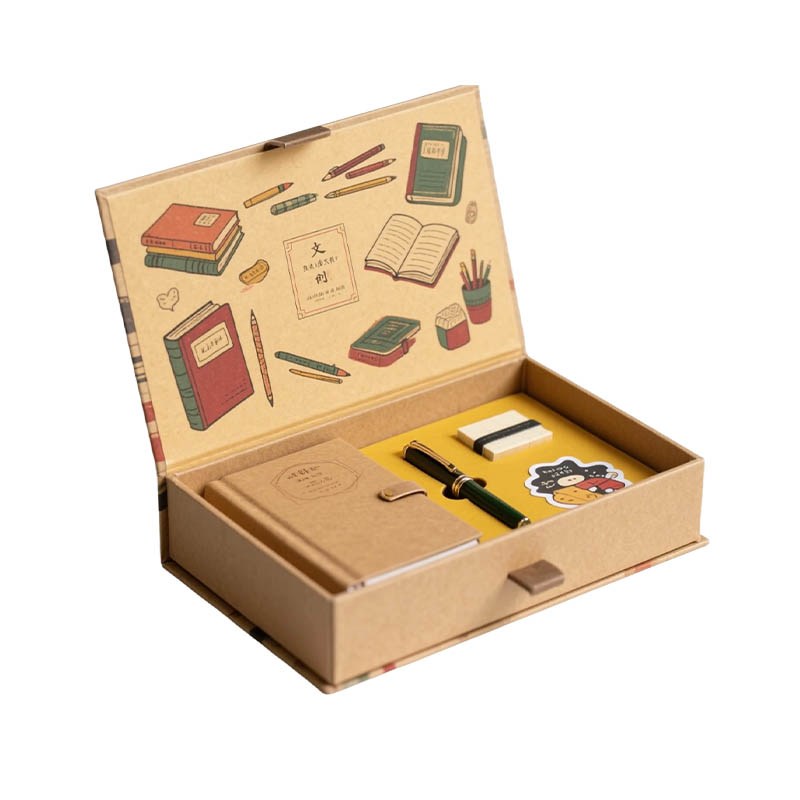
Structurally, pull-out boxes typically consist of an outer box (shell) and an inner box (drawer), creating natural functional partitions. The outer box serves for display and protection, and its surface can be treated with hot stamping, embossing, or UV spot varnishing to showcase brand logos or artistic designs. The inner box focuses on product support, often featuring EVA foam, flocked fabric, or molded pulp lining to securely hold items in place and prevent movement during transport. This "visible on the outside, concealed on the inside" layout satisfies both visual impact during display and ensures the safety and privacy of the contents.
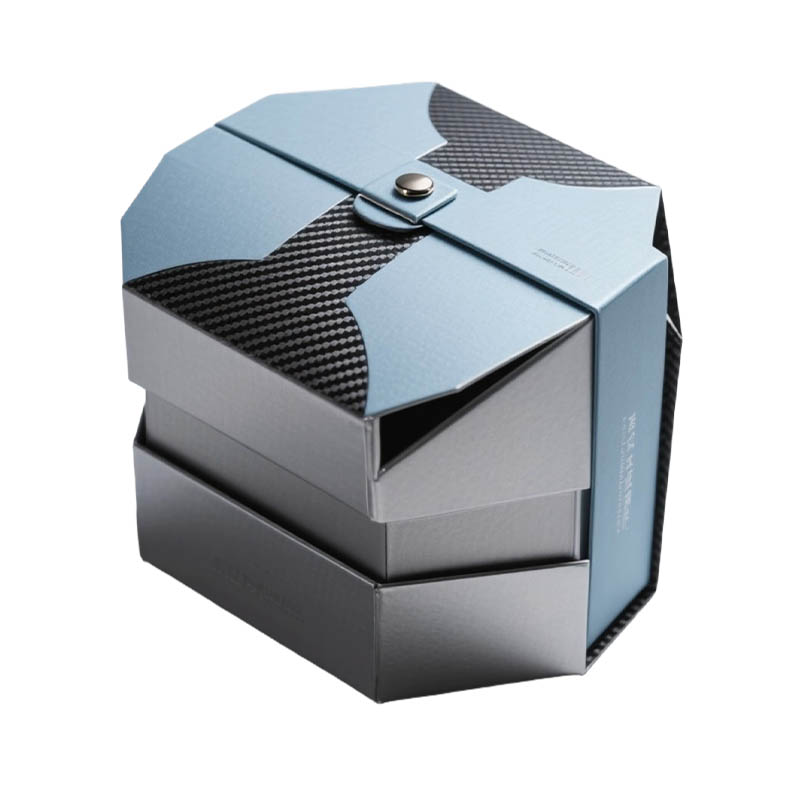
The choice of materials is extremely diverse. Cardboard is the most common substrate, environmentally friendly and recyclable, and easy to print and die-cut; wooden pull-out boxes exude a natural texture and a sense of weighty value, suitable for tea sets and stationery; metal or acrylic materials bring a modern, technological feel, fitting the aesthetic of digital products. Regardless of the material, the key lies in the tolerance between the inner and outer boxes—too much gap will result in looseness and rattling, too little will cause jamming and difficulty in pulling. Therefore, high-precision die-cutting and a production environment under temperature and humidity control are prerequisites for ensuring a smooth feel.
On the brand narrative level, the pull-out structure offers abundant creative space. Designers can use the pull-out process to present information in stages: the outer box cover arouses curiosity, pulling it halfway reveals the product outline, and the bottom plate, fully pulled out, displays brand mottos or usage instructions. This "gradual revelation" extends the user's interaction time with the product, reinforcing memorable moments. Limited edition holiday items can further incorporate hidden compartments, pop-out cards, or fragrance sheets to create a sense of surprise.
Sustainability is also taken into consideration. Many brands use FSC-certified paper and soy-based ink for printing, and design reusable boxes—empty boxes can be used as storage cases, jewelry boxes, or desktop ornaments, extending the packaging's lifespan and reducing single-use waste. This shift from "use-and-discard" to "use-and-recycle" aligns with contemporary consumers' expectations for environmental responsibility.
More importantly, the pull-out box embodies a respect for "slow experiences." In the fast-paced digital age, the process of opening a box—requiring both hands, focused attention, and gentle movements—becomes a rare sensory pause. It reminds people that true value sometimes lies not in speed, but in details; not in possession, but in feeling.
Although the pull-out box is only a corner of packaging, it perfectly blends functionality and emotion through its ingenious structure, tactile appeal, and visual beauty. It is not just a container, but also a carrier of brand sincerity, a starting point for user experience, and a precious ritual in daily life. The moment your fingertips lightly touch the pull strap and slowly pull it out, you are not only opening the product, but also a carefully wrapped sense of respect and anticipation.
The allure of the pull-out box stems first from its unique interactive experience. Users simply grasp the inner box or the pull strap to experience the smooth, fluid pulling process, like slowly unveiling the curtain of a story. This linear, controllable opening method avoids the abruptness of flip-top packaging or the cumbersome folding structure, giving the unboxing process a relaxed and rhythmic feel. Designers often incorporate ribbons, grooves, or metal pull rings at the front of the inner box, facilitating opening and adding aesthetic appeal. Some high-end versions even employ magnetic soft-close or damped sliding rails, ensuring a quiet and precise opening experience, much like a fine instrument.
Structurally, pull-out boxes typically consist of an outer box (shell) and an inner box (drawer), creating natural functional partitions. The outer box serves for display and protection, and its surface can be treated with hot stamping, embossing, or UV spot varnishing to showcase brand logos or artistic designs. The inner box focuses on product support, often featuring EVA foam, flocked fabric, or molded pulp lining to securely hold items in place and prevent movement during transport. This "visible on the outside, concealed on the inside" layout satisfies both visual impact during display and ensures the safety and privacy of the contents.
The choice of materials is extremely diverse. Cardboard is the most common substrate, environmentally friendly and recyclable, and easy to print and die-cut; wooden pull-out boxes exude a natural texture and a sense of weighty value, suitable for tea sets and stationery; metal or acrylic materials bring a modern, technological feel, fitting the aesthetic of digital products. Regardless of the material, the key lies in the tolerance between the inner and outer boxes—too much gap will result in looseness and rattling, too little will cause jamming and difficulty in pulling. Therefore, high-precision die-cutting and a production environment under temperature and humidity control are prerequisites for ensuring a smooth feel.
On the brand narrative level, the pull-out structure offers abundant creative space. Designers can use the pull-out process to present information in stages: the outer box cover arouses curiosity, pulling it halfway reveals the product outline, and the bottom plate, fully pulled out, displays brand mottos or usage instructions. This "gradual revelation" extends the user's interaction time with the product, reinforcing memorable moments. Limited edition holiday items can further incorporate hidden compartments, pop-out cards, or fragrance sheets to create a sense of surprise.
Sustainability is also taken into consideration. Many brands use FSC-certified paper and soy-based ink for printing, and design reusable boxes—empty boxes can be used as storage cases, jewelry boxes, or desktop ornaments, extending the packaging's lifespan and reducing single-use waste. This shift from "use-and-discard" to "use-and-recycle" aligns with contemporary consumers' expectations for environmental responsibility.
More importantly, the pull-out box embodies a respect for "slow experiences." In the fast-paced digital age, the process of opening a box—requiring both hands, focused attention, and gentle movements—becomes a rare sensory pause. It reminds people that true value sometimes lies not in speed, but in details; not in possession, but in feeling.
Although the pull-out box is only a corner of packaging, it perfectly blends functionality and emotion through its ingenious structure, tactile appeal, and visual beauty. It is not just a container, but also a carrier of brand sincerity, a starting point for user experience, and a precious ritual in daily life. The moment your fingertips lightly touch the pull strap and slowly pull it out, you are not only opening the product, but also a carefully wrapped sense of respect and anticipation.